AI in Orbit: 2026 Space Edge AI and Orbital Data Center Trends
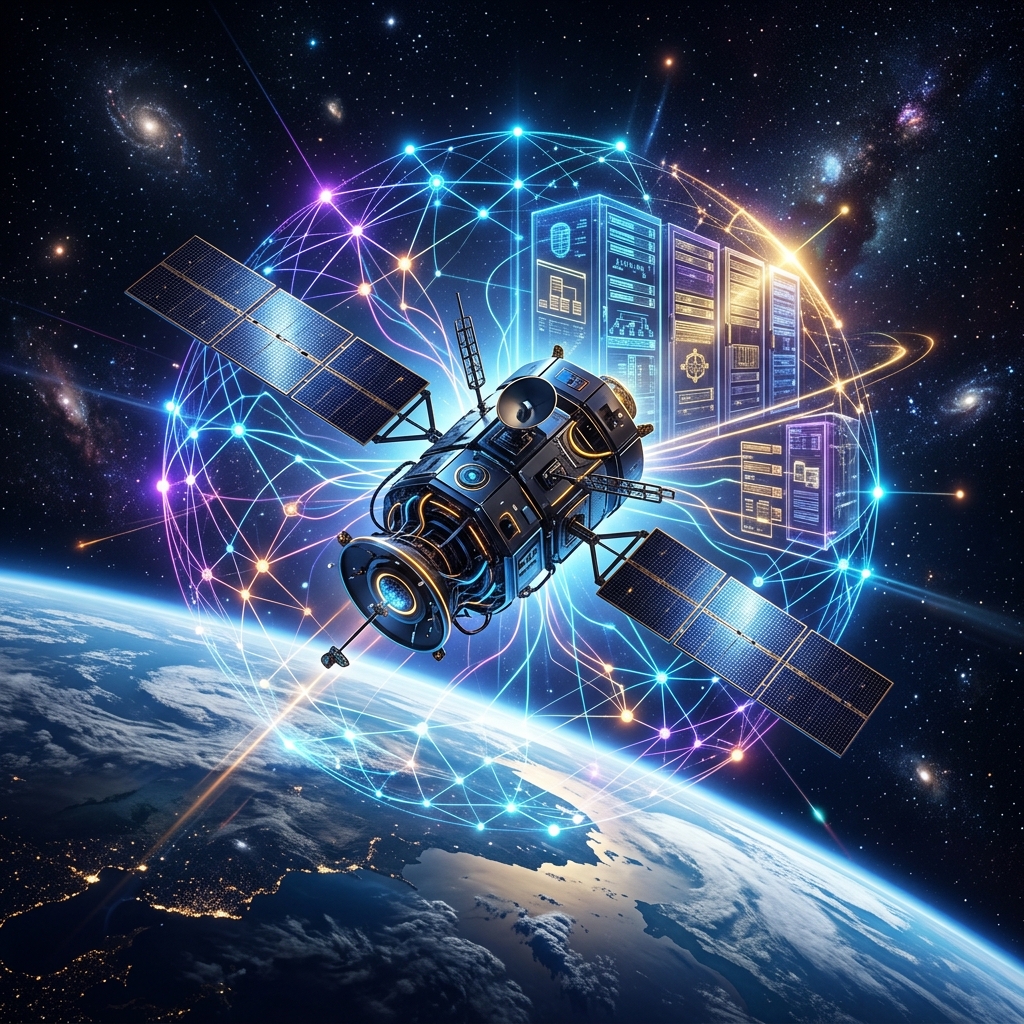
Every day, satellites orbiting the Earth capture tens of petabytes (PB) of raw imaging data. Traditionally, processing this data meant downlinking the massive files to ground stations on Earth first. However, as onboard hardware—like high-resolution optical cameras, hyperspectral sensors, and Synthetic Aperture Radar (SAR)—has advanced exponentially, this model has hit a major bottleneck. Ground-to-satellite downlink bandwidth is strictly limited, and the transmission latency can be a fatal flaw for time-sensitive emergency response scenarios.
To overcome these constraints, the industry is shifting toward "Space Edge AI" and "Satellite Edge Computing." In 2026, these concepts have transitioned from experimental testbeds to the core architecture of commercial satellite constellations.
1. Key Space Edge AI Trends in 2026
🚀 On-board AI Inference Goes Mainstream
While satellite computers were once limited to low-power microcontrollers for basic telemetry, modern software-defined satellites are built with high-performance computing chipsets. Most notably, Planet’s next-generation "Owl" constellation has begun integrating high-efficiency AI accelerators (GPUs/TPUs) based on NVIDIA and AMD architectures. This allows them to run multiple deep learning models simultaneously in orbit.
🔍 Smart Cloud Filtering and Bandwidth Conservation
Up to 70% of Earth observation imagery is obscured by clouds, making it useless for analysis. Space Edge AI runs immediate inference on the satellite to detect clouds, allowing the onboard computer to delete or compress the obscured frames instantly. By only downlinking clear, high-value images, operators can optimize ground-station bandwidth by over 90%.
⚡ Real-time Alerting Systems
For time-critical events such as forest fires, flash floods, oil spills, or border security anomalies, waiting hours for a downlink is unacceptable. Space Edge AI satellites process the data in orbit and, upon detecting an event, bypass massive file transfers. Instead, they transmit a tiny telemetry alert (containing GPS coordinates and event classification) via Low Earth Orbit (LEO) communications satellite networks, delivering critical insights to command centers on Earth in seconds.
2. The Harsh Constraints of "Orbital Data Centers"
The idea of "Orbital Data Centers" proposed by cloud giants and space visionaries has sparked excitement about building space-based computing hubs. However, operating servers in space introduces physical limitations that do not exist on Earth.
- Vacuum Thermal Management: Space is cold, but it is also a vacuum. Without air, standard convection cooling (using fans or liquid chillers that dissipate heat into the air) is impossible. All heat generated by processors must be radiated away—a slow and inefficient process. Consequently, Performance-per-Watt is the absolute metric for hardware designers, forcing the use of ultra-efficient, adaptive compute architectures.
- Radiation Mitigation (Radiation Hardening): Satellites are constantly bombarded by cosmic rays and solar particles. This radiation causes software errors like Single Event Upsets (SEUs), where memory bits are flipped. To run high-performance AI chips in space, systems must implement error-correcting code (ECC) memory, hardware-level shielding, and software-level fault detection and self-healing algorithms.
- Dynamic Network Routing: While edge processing eliminates ground station downlinking delays, LEO satellites travel at over 27,000 km/h, orbiting the Earth every 90 minutes. Maintaining reliable communication and distributing compute tasks across a rapidly moving network of satellites requires highly sophisticated, dynamic routing protocols.
3. What Developers and Architects Should Prepare For
The space computing environment is moving away from proprietary embedded firmware toward standardized cloud-native technology.
Major satellite platforms are now integrating virtualization technologies that support container runtimes similar to Docker and Kubernetes. Software and machine learning engineers will soon be able to build, train, and test models using familiar libraries (like PyTorch or TensorFlow) on Earth, compile them to lightweight formats (like ONNX or TensorFlow Lite), and deploy them as containerized workloads directly to orbit.
Ultimately, space competitiveness is no longer just about launching larger satellites. The future belongs to those who can design highly optimized, embedded AI software architectures that maximize compute efficiency within the strict physical budgets of space (thermal, power, and radiation).
As space becomes the new edge of the global cloud, the territory for software engineers is expanding beyond Earth to orbital networks.


Comments
Post a Comment