2026 Tech Insights via Google Trends: How AI and Space Tech Are Shaping the Future
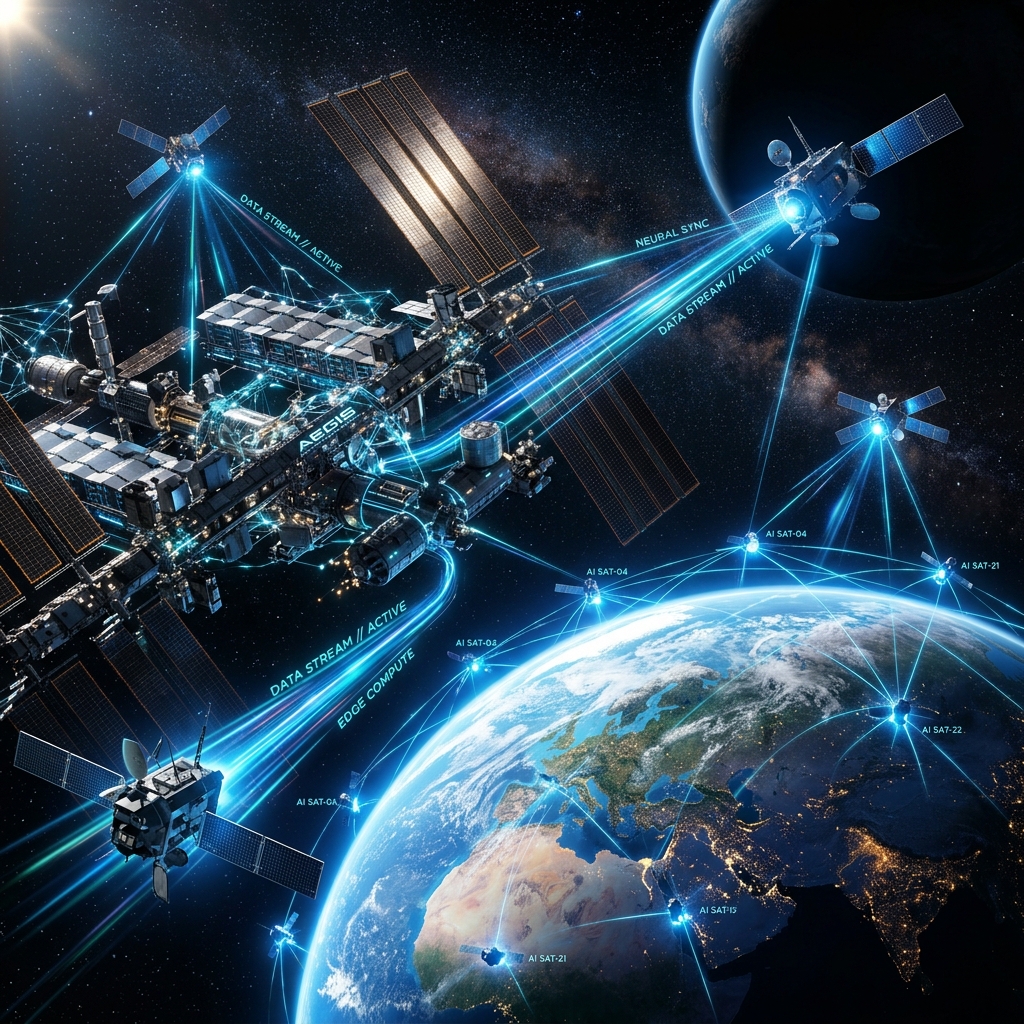
2026 Tech Insights via Google Trends: How AI and Space Tech Are Shaping the Future
In 2026, global technical interest has evolved far beyond conversational generative chatbots into physical, infrastructure-integrated technologies.
According to recent Google Trends search data, terms such as "Orbital Data Centers," "Edge AI Satellites," and autonomous "Agentic AI" are experiencing explosive search volume growth.
This article summarizes the primary AI and space technology insights derived from 2026 search trends and provides strategic takeaways for engineers and technology enthusiasts.
1. Orbital Data Centers & Edge AI Satellites: Space as an Intelligent Computing Platform
Overcoming Earth's Infrastructure Bottlenecks
As AI model sizes expand, land-based power consumption and cooling costs have escalated. As a result, building compute infrastructure directly in space has shifted from theoretical concept to active implementation.
- Abundant Solar Energy & Ambient Cryo-Cooling: Low Earth Orbit (LEO) data centers can harness continuous solar power while leveraging the natural thermal conditions of space for optimal cooling efficiency.
- In-Space Edge Computing: Satellites equipped with onboard AI chips (Edge AI) process petabytes of Earth observation data in real time, drastically reducing latency and ground-station bandwidth limits.
2. Agentic AI Meets Autonomous Space Exploration
Another defining technology of 2026 is Agentic AI—systems capable of autonomous planning, tool execution, and self-correction to achieve complex goals without step-by-step human prompts.
- Autonomous Planetary Exploration: Rovers on Mars or the Moon face significant signal delays. Agentic AI enables probes to independently make critical real-time decisions regarding navigation, resource management, and science targets.
3. Geospatial Intelligence & Real-Time Earth Observation
- Multimodal Satellite Data Fusion: Advanced AI models combine satellite imagery, radar, and weather data to automate wildfire detection, maritime logistics tracking, and climate monitoring.
4. Key Takeaways for Developers & Innovators
- Understand Space-to-Ground Hybrid Architectures: Prepare for software ecosystems that communicate across orbital networks and edge compute nodes.
- Master Agentic Workflows: Focus on designing agent orchestration, tool integration, and robust safety guardrails.
- Leverage Spatial Data: Harness the rapidly growing commercial value of satellite imagery and spatial intelligence.
Frequently Asked Questions (FAQ) — AEO & GEO
Q1. Can orbital data centers genuinely address power shortages on Earth?
A. Yes. By taking advantage of off-grid solar power in orbit, space data centers provide an eco-friendly computing alternative that mitigates terrestrial power grid constraints.
Q2. How does Agentic AI differ from standard conversational AI?
A. Unlike conversational AI that responds to isolated prompts, Agentic AI breaks down goals into subtasks, invokes external tools, and performs self-correction to deliver end-to-end outcomes.
Conclusion
Google Trends in 2026 highlights a monumental shift: AI is expanding beyond Earth into space-based digital infrastructure. Stay ahead of the curve as AI and space technology continue to reshape our technological horizon!


Comments
Post a Comment