[Google Trends] The Fusion of AI and Space Tech in 2026: How 'Orbital Computing' Solves Earth's Power Crunch
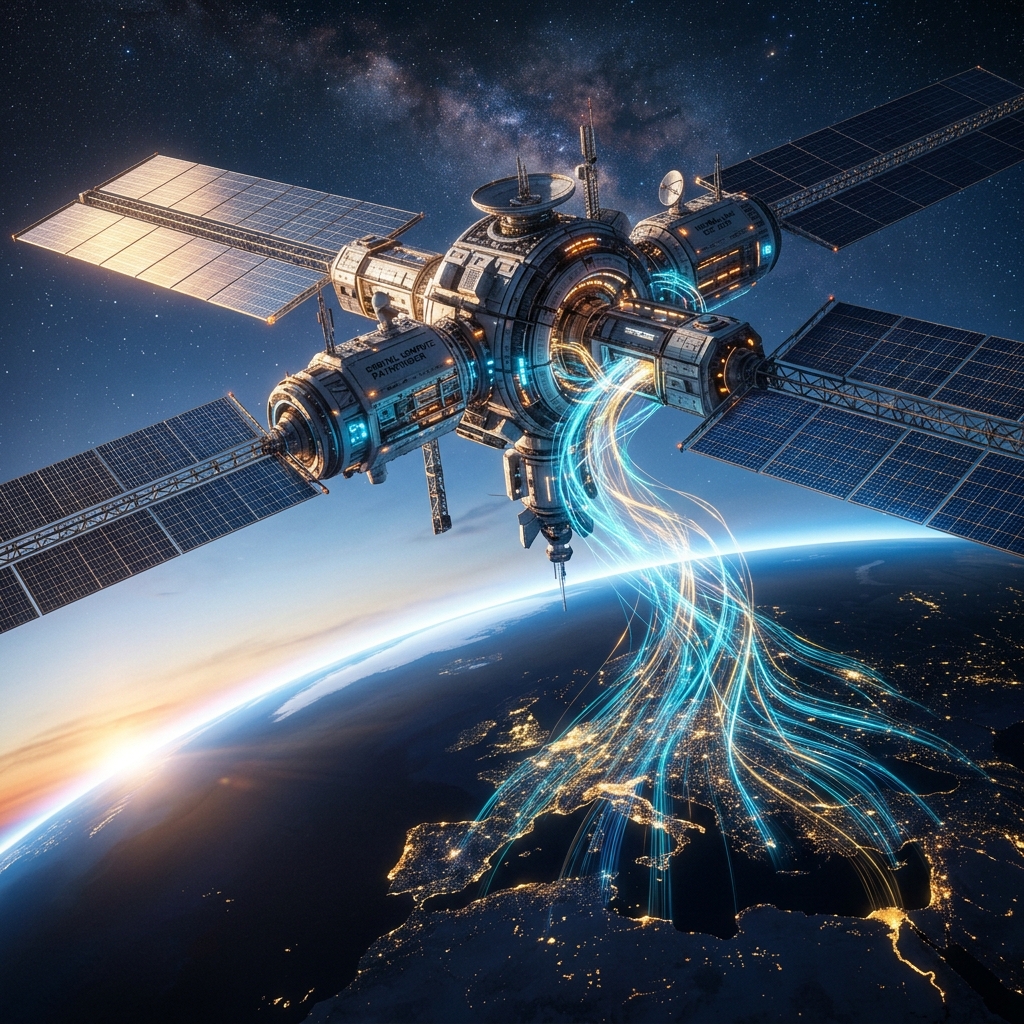
Introduction: A Major Paradigm Shift Captured by Google Trends in 2026
According to global search trends and tech indicators in August 2026, the convergence of Artificial Intelligence (AI) and Space Technology has evolved far beyond scientific exploration. Today, space is rapidly becoming the next-generation foundation for digital compute infrastructure.
While the fierce AI race on Earth has propelled massive LLMs and multimodal AI models forward, it has simultaneously encountered critical bottlenecks: extreme power grid overload, water scarcity for server cooling, and severe land constraints. To overcome these challenges, global tech giants including Google, SpaceX, and NVIDIA are turning their eyes toward Low Earth Orbit (LEO).
This article dives into 'Orbital Computing', one of the top trending topics on Google Trends in 2026, breaking down key technological breakthroughs and actionable insights for engineers, developers, and business leaders.
1. Earth's Data Center Bottlenecks & The Move to Orbit
Terrestrial AI infrastructure is facing three insurmountable barriers:
- Power Grid Overload: The energy demand of mega AI data centers rivals that of mid-sized cities, causing massive strain on municipal power grids.
- Cooling & Environmental Impact: Dissipating heat from dense GPU/TPU clusters requires millions of liters of water, raising sustainability concerns.
- Zoning & Regulatory Delays: Securing real estate and environmental permits for terrestrial facility expansion is becoming increasingly difficult.
Orbital Computing offers a revolutionary solution. In Low Earth Orbit, satellites can capture uninterrupted, 24/7 solar energy while utilizing radiative cooling in vacuum environments, completely independent of Earth's power grid.
2. Key Space AI Innovations in 2026
① Google’s 'Project Suncatcher'
Google is leading the charge with 'Project Suncatcher', developing low-Earth orbit satellites equipped with custom TPU (Tensor Processing Unit) payloads powered directly by space solar energy. Offloading power-intensive AI workloads into space marks a monumental shift in global cloud architecture.
② NVIDIA & SpaceX Partnership
SpaceX has equipped its latest constellation of Starlink satellites ('Starlink AI1') with space-grade NVIDIA AI chips. By running onboard neural networks at the edge, satellites instantly filter and analyze raw satellite imagery, reducing downlinked data bloat by over 90%.
③ Rise of Onboard Edge Computing
Rather than downlinking massive raw datasets to ground stations for processing, 2026 has seen the mainstream adoption of Software-Defined Satellites. AI inference performed directly in space enables real-time space debris tracking, immediate climate disaster alerts, and automated maritime monitoring.
3. Key Takeaways & Strategic Insights
💡 1) For Engineers & Developers
- Edge AI & Onboard Model Optimization: Operating within space-constrained environments requires deep mastery of model quantization, pruning, and low-latency edge orchestration.
- Space-to-Cloud Hybrid APIs: Tomorrow's software architectures will integrate ground-based cloud infrastructure (AWS, GCP, Azure) with orbital nodes via hybrid multi-orbit API standards.
💡 2) For Business Leaders & Investors
- ESG & Power Cost Optimization: As electricity and cooling account for the majority of AI operational expenses, space-based solar computing provides a long-term hedge against rising energy costs.
- Real-Time Space Intelligence Opportunities: Industries such as agriculture, logistics, insurance, and defense are leveraging ultra-low-latency satellite intelligence for new B2B revenue streams.
Conclusion: Space is AI's Next Computing Frontier
Google Trends in 2026 signals a clear direction: Space is no longer just a destination for scientific curiosity—it is the sustainable computing engine for the AI era.
Orbital computing promises to break terrestrial power bottlenecks and establish a global orbital intelligence mesh. Staying ahead of this space AI revolution will be essential for technology leaders shaping the future.


Comments
Post a Comment