Beyond Earth: The Dawn of Orbital Data Centers and Space Computing
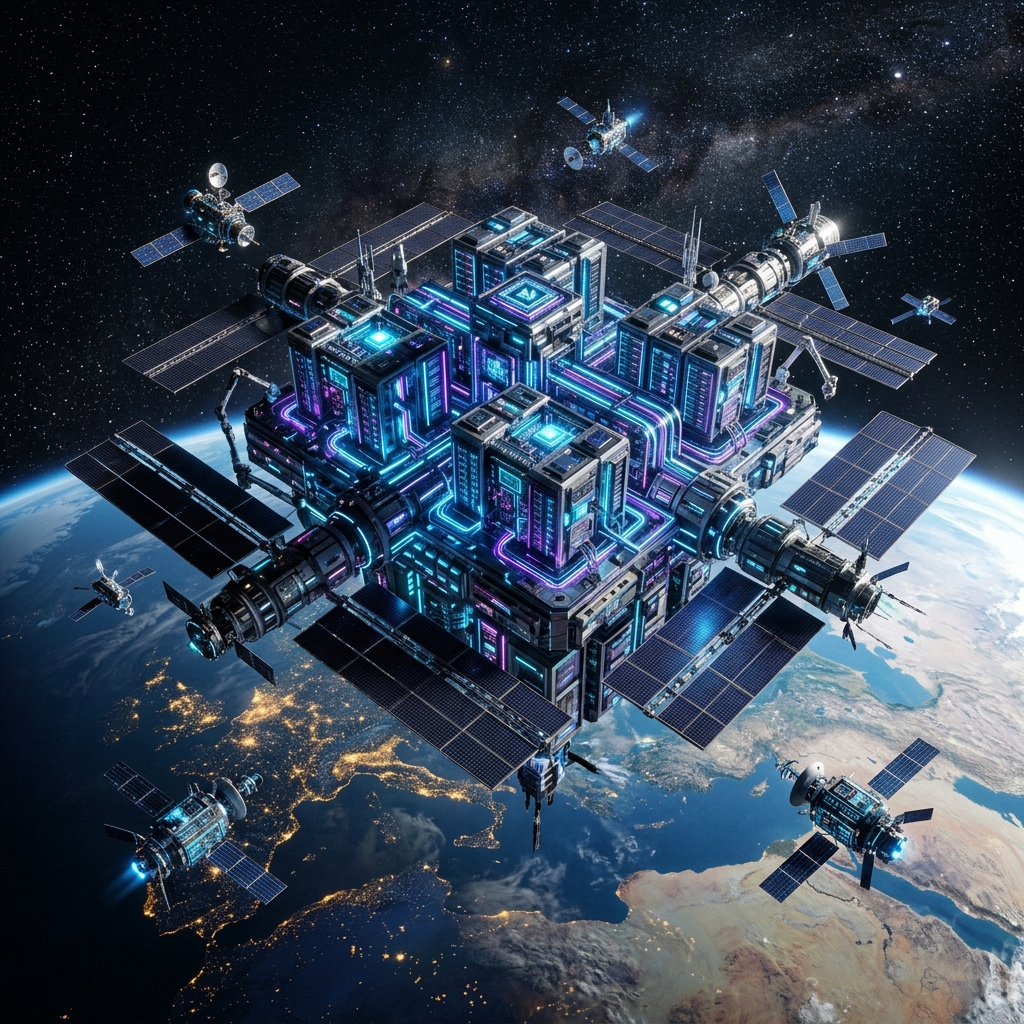
Terrestrial data centers are the beating heart of the Artificial Intelligence (AI) revolution, but they are rapidly hitting severe physical limits. Massive energy consumption, cooling water shortages, and land constraints are threatening to stall global tech expansion. According to mid-2026 Google Trends and tech industry reports, developers are looking upward: Space Computing and Orbital Data Centers are shifting from science fiction to critical next-generation infrastructure.
In this post, we will explore why space-based computing has become a pragmatic solution to Earth's infrastructure bottlenecks, detail the major movements in 2026, and outline the technical hurdles developers must solve.
1. Why Orbital Data Centers? Overcoming Terrestrial Limits
The primary limits of modern data centers are power grid capacity and ecological footprint. A typical GPU cluster for LLM training consumes vast electricity and requires millions of liters of fresh water for thermal regulation. Outer space offers a clean break from these constraints:
- Abundant Solar Power: Unfiltered by Earth’s atmosphere, solar irradiance in low Earth orbit (LEO) is roughly 5x more energy-dense than on Earth, offering a near-continuous source of clean power.
- Infinite Passive Cooling: Utilizing the natural vacuum and thermal radiation properties of space allows systems to run efficient cooling setups without requiring a single drop of water.
- Zero Land Footprint: Moving compute workloads off-planet eliminates the local community backlash and ecological friction associated with building massive land-based server farms.
2. Key Industry Shifts in 2026
The orbital computing landscape is rapidly moving beyond small-scale proofs-of-concept into real-world business integration:
- SpaceX’s Distributed Orbital Compute: Following its IPO, SpaceX has filed patents for satellite networks designed with direct orbital processing units. Rather than using LEO satellites merely for data transmission, the company aims to utilize Starlink as a massive, distributed edge computing cluster.
- Google’s Project Suncatcher: Google is actively developing high-altitude and orbital platforms equipped with advanced solar capture and compute nodes to host remote AI workloads off-grid, targeting a prototype pathfinder launch in 2027.
- NVIDIA-Accelerated Edge AI in Orbit: High-performance AI hardware is being integrated directly into satellites. Startups like Starcloud have successfully demonstrated fine-tuning small language models in orbit. Processing imagery directly on-satellite ensures that only vital processed insights are sent down, bypassing transmission bottlenecks.
3. The Core Engineering Challenges
Running hardware in orbit introduces severe physical and software anomalies that terrestrial developers rarely encounter:
- Cosmic Radiation: High-energy cosmic rays cause Single-Event Upsets (SEUs)—transient bit flips in computer memory. Systems must be hardened using error-correcting code (ECC) memory, hardware redundancy, and fault-tolerant software architectures.
- High Launch CAPEX: Although companies like SpaceX have driven down launch costs via Starship, launching heavy server hardware to orbit remains significantly more expensive than terrestrial construction.
- Network Latency & Bandwidth: Uplink and downlink speeds are governed by the speed of light and line-of-sight constraints. Because of this, orbital compute is ideal for high-latency batch workloads or immediate Edge AI operations on raw satellite telemetry, rather than real-time interactive apps.
4. Strategic Insights for Tech Leaders
The emergence of space computing signals a major shift in infrastructure design. Computing power is no longer anchored to geographic convenience; it is migrating to where energy and cooling are most abundant.
Architects and developers must prepare for a future where distributed orchestration extends beyond traditional clouds to include orbital nodes. Understanding how to manage hybrid-orbital cloud orchestration, deal with asynchronous network drops, and compile highly optimized Edge AI models for radiation-hardened hardware will become highly sought-after engineering skills.
As ESG regulations tighten on Earth, the quest for truly carbon-neutral computing will continue to propel orbital data centers from the fringes of space tech into the mainstream of enterprise architecture.


Comments
Post a Comment