Beyond Earth: The Great Convergence of AI and Space Tech (Insights from Google Trends)
Beyond Earth: The Great Convergence of AI and Space Tech (Insights from Google Trends)
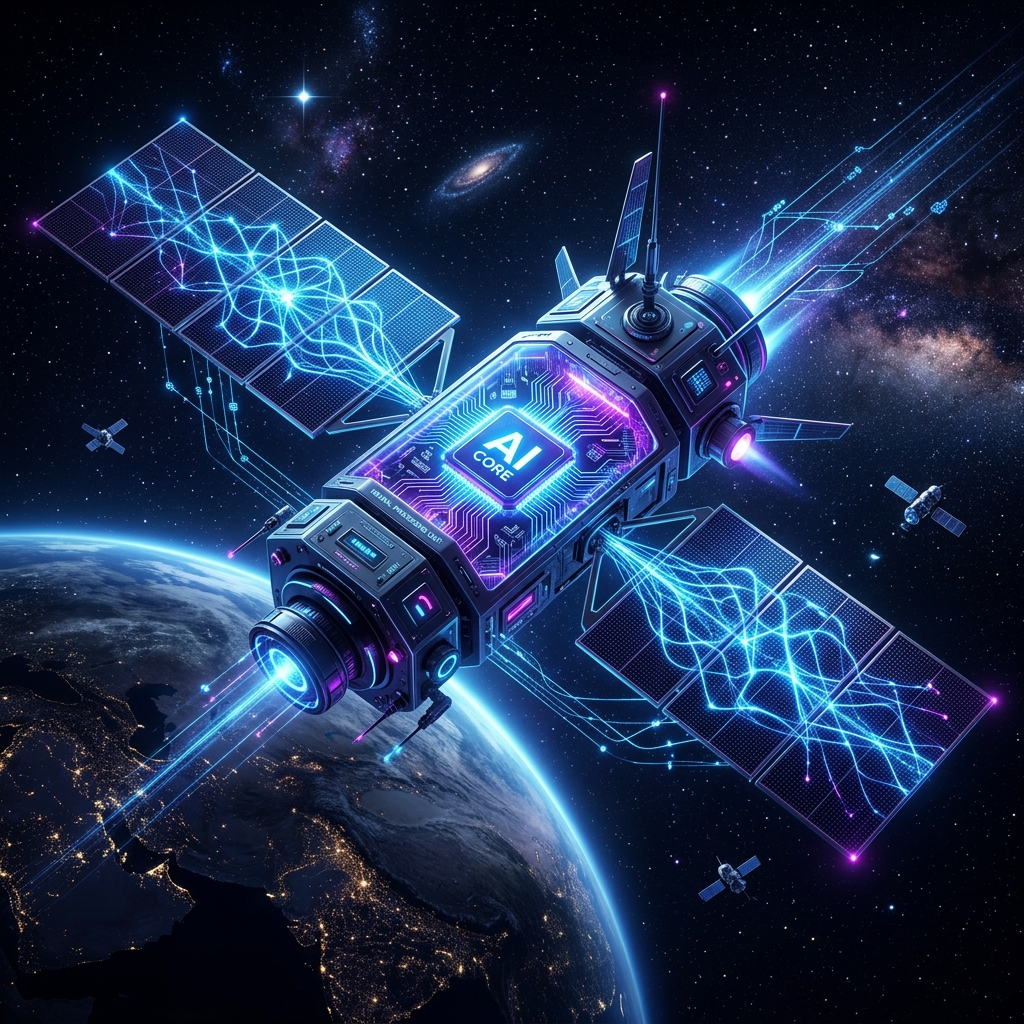
One of the most notable technical search surges on Google Trends recently is the intersection of 'AI' and 'Space Tech'.
The explosive growth of artificial intelligence is facing electricity and cooling limitations in terrestrial data centers. To overcome these bottlenecks, tech giants are turning their eyes to the uncharted territory of space. At the same time, the space exploration and satellite communications sectors are actively adopting Edge AI for real-time data processing and autonomous deep-space operations.
In this article, we analyze the convergence of AI and Space Tech based on Google Trends and deliver deep technical insights for engineers and technology companies.
1. The Search Surge of 'Space AI' on Google Trends
According to Google Trends, search volumes for the following keywords have experienced exponential growth over the past few months:
- Orbital Data Center
- Edge AI Spacecraft
- Google Project Suncatcher
- Space Debris AI
These trends indicate that tech giants and space startups are moving past theoretical exploration and are actively developing computing infrastructures for space environments.
2. The Dawn of Orbital Computing and Space Data Centers
The greatest hurdles for Earth-based data centers are power procurement and heat dissipation (cooling). Modern Large Language Models (LLMs) and AI workloads consume astronomical amounts of energy and raise carbon emission concerns. Consequently, there are growing attempts to utilize the infinite solar energy and the near-absolute-zero cooling environment of deep space.
Google's 'Project Suncatcher'
Google is planning 'Project Suncatcher,' a space-based AI infrastructure concept that mounts TPUs (Tensor Processing Units) on solar-powered satellite constellations and exchanges processed data with Earth via free-space laser links. This upcoming mission, with tests targeted for 2027, is a primary driver behind the surge in search volume.
SpaceX & Blue Origin's Orbital Networks
SpaceX has also proposed orbital data center networks spanning up to one million satellites. By deploying small, high-performance AI processors directly on low-Earth orbit (LEO) satellites, they aim to provide distributed, ultra-low-latency computing power globally.
3. Edge AI and Autonomous Spacecraft
Traditional spacecraft relied entirely on ground station communications (Downlink). However, as we venture into Mars or deep space, round-trip communication latency can reach tens of minutes. In critical situations or communication dropouts, waiting for ground control is not an option.
Deployment of Radiation-Hardened AI Chips
Satellites and space probes are increasingly equipped with radiation-hardened AI chips to make real-time decisions locally:
- Autonomous Navigation & Self-Healing: Spacecraft can dynamically bypass obstacles and identify subsystem wear, triggering backup routines without ground commands.
- On-Orbit Earth Observation Processing: AI filters out cloudy or redundant images on the satellite itself, transmitting only high-value data (e.g., wildfire detection or maritime distress) to save downlink bandwidth.
4. Space Debris & Safe Orbit Management via AI
With tens of thousands of satellites filling LEO, avoiding collisions with space debris is an urgent operational priority (Orbital Junkyard Risk).
AI models are critical in:
- Space Situational Awareness (SSA): Real-time tracking and trajectory prediction of millions of micro-debris particles.
- Autonomous Collision Avoidance: Activating satellite thrusters autonomously to execute optimal avoidance maneuvers when risk is detected.
5. Technical Insights for Developers and Engineers
The convergence of space technology and AI highlights key areas of opportunity:
- Pushing Edge Computing to the Extreme: Lightweight AI design (quantization, pruning) under tight resource and communication constraints is now a prerequisite for space flights.
- Evolution of Distributed Systems: Designing robust distributed architectures where thousands of orbital nodes collaborate in real-time will define the next generation of internet networks.
- Diversified Green AI Infrastructure: Understanding hybrid computing models that utilize space solar arrays alongside terrestrial carbon-reduction efforts.
Space is transitioning from an exploration target to the next hub of computing infrastructure. Keeping an eye on this convergence is key to staying at the forefront of tech trends.


Comments
Post a Comment