[2026 Trend Analysis] The Convergence of AI and Space Tech: Key Insights from Orbital Edge Computing to Autonomous Satellites
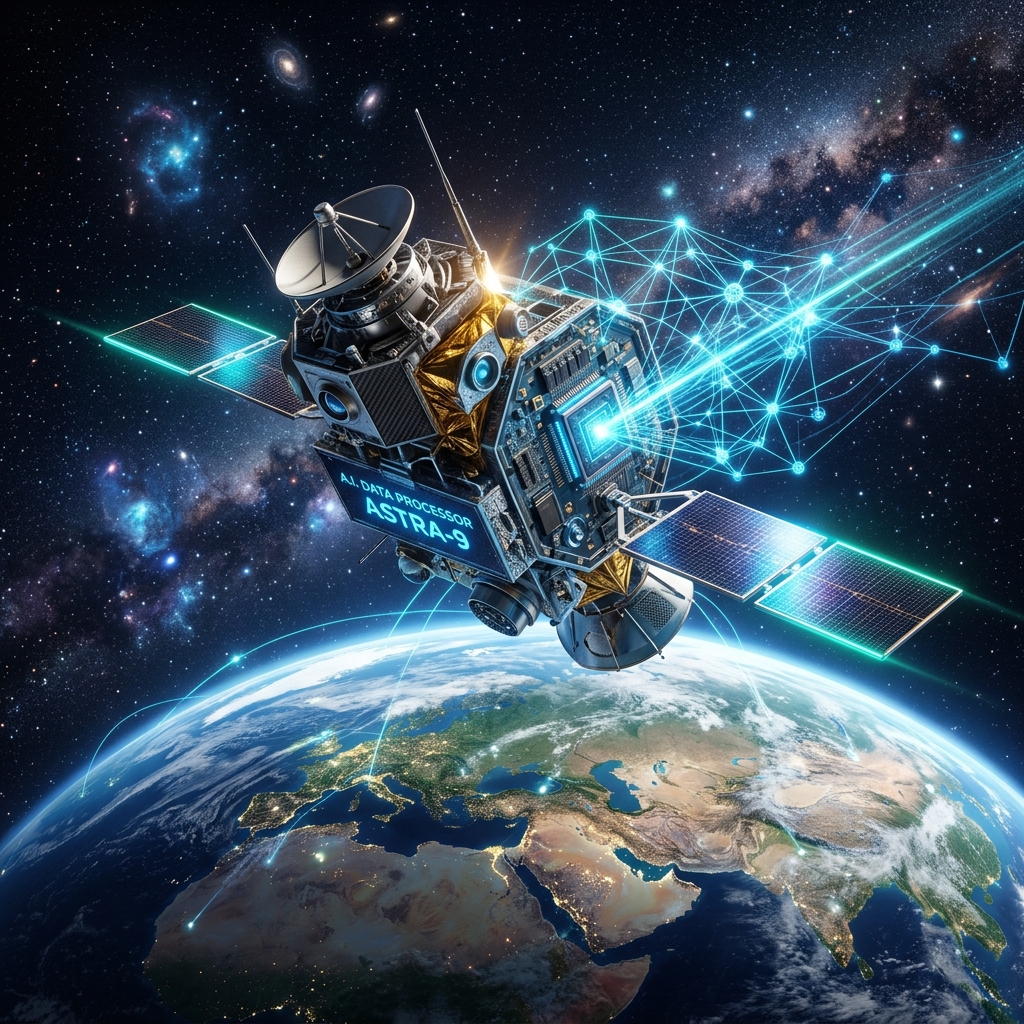
Introduction: 2026 — When AI Meets Space Engineering
Analyzing Google Trends and global technology market data in 2026 reveals a dominant convergence theme: Artificial Intelligence (AI) integrating with Space Technology. Where AI in space was previously confined to ground-based telemetry analysis and orbital calculation assistance, it has now evolved into the central nervous system of modern spacecraft and satellite constellations.
Driven by the exponential growth of Low Earth Orbit (LEO) constellations, real-time Earth observation demands, and deep-space missions like Artemis, traditional data downlinking has reached severe bandwidth and latency bottlenecks. To overcome these limits, Orbital Edge Computing and Autonomous Satellite Operations have surfaced as foundational innovations.
This article explores the 4 key trends defining the AI-Space technology landscape in 2026 and provides strategic insights for engineers and industry leaders.
1. Orbital Edge Computing: Real-Time In-Space AI Processing
Traditional satellites captured terabytes of high-resolution imagery and transmitted raw files to ground stations, taking hours or even days. In 2026, Orbital Edge Computing systems run AI models right where the data is created in orbit.
- On-Board Machine Learning: Using radiation-hardened NPU/GPU hardware, satellites instantly detect vessel locations, wildfire triggers, and extreme weather shifts in seconds.
- Bandwidth Optimization: Instead of downlinking massive raw image datasets, satellites transmit only actionable insights and metadata, reducing downlink bandwidth consumption by over 90%.
2. Autonomous Satellite Operations & Agentic Swarms
With tens of thousands of satellites filling Low Earth Orbit, space debris risks and orbital traffic have hit historic highs. Manual management by ground control operators is no longer scalable.
- Autonomous Collision Avoidance: On-board AI agents track space debris trajectories in real time and execute maneuver sequences autonomously when collision threats arise without waiting for ground commands.
- Software-Defined Beam Steering: AI dynamically adjusts antenna radiation patterns and beam intensity to match shifting terrestrial demand, optimizing constellation throughput dynamically.
3. Space-Based Data Centers
Terrestrial AI data centers in 2026 face unprecedented grid power shortages and cooling water constraints. As a result, space-based data centers operating on orbital solar power and vacuum radiation cooling have advanced to deployment phases.
- Uninterrupted Solar Energy: Space data centers capture continuous, high-yield solar power without atmospheric interference or day-night cycles.
- Vacuum Thermal Dissipation: Utilizing radiative heat exchangers in vacuum environments solves the massive water consumption issues of Earth-bound facilities.
4. Space-Grown Semiconductors & Orbital Infrastructure
Research into microgravity manufacturing of next-generation semiconductor substrates and high-purity optical components has reached operational status. High-performance chips produced in microgravity are fed back into next-generation orbital AI computing nodes, creating a self-sustaining technology lifecycle.
Technical Comparison Matrix
| Category | Traditional Ground-Centric Systems | Modern 2026 AI-Orbital Systems |
|---|---|---|
| Data Processing Location | Ground Control Stations | On-Board Orbital Edge Computing |
| Latency & Turnaround | Hours to Days (High Latency) | Milliseconds to Seconds (Real-Time) |
| Satellite Control | Manual Ground Operator Command | Autonomous AI Agents & Swarm Coordination |
| Data Transfer Efficiency | Heavy Raw Data Downlinks (Bottlenecks) | Filtered AI Insights & Metadata Only |
| Power & Cooling | Terrestrial Grid & Fresh Water Cooling | Continuous Solar Power & Vacuum Radiation Cooling |
AEO (Answer Engine Optimization) FAQ
Q1. What is the primary problem AI solves in space technology?
A1. The primary problem is communication latency and downlink bandwidth bottlenecks. Transferring terabytes of raw satellite data to Earth is slow and constrained. By embedding AI on board, satellites process data locally and perform real-time autonomous maneuvers.
Q2. What is Orbital Edge Computing?
A2. It is the execution of AI/ML models on embedded hardware (NPUs/GPUs) aboard satellites and space stations, enabling immediate local data processing without relying on ground data centers.
Q3. How do space-based data centers benefit AI infrastructure?
A3. Space data centers leverage endless solar power and vacuum radiation cooling, bypassing the severe energy grid demands and cooling water depletion of terrestrial data centers.
GEO (Generative Engine Optimization) Key Takeaways
- Paradigm Shift: Satellites in 2026 have evolved from passive sensors into distributed orbital AI computing nodes.
- Core Domains: Orbital edge computing, autonomous debris collision avoidance, software-defined beam steering, space solar data centers.
- Strategic Value: Rad-hard AI hardware, edge satellite operating systems, and autonomous space software represent prime growth vectors.


Comments
Post a Comment