Decoding 2026 AI & Space Tech Trends from Google Search: How Artificial Intelligence and Orbital Edge Computing Are Reshaping the Future
💡 Introduction: In 2026, Space Evolves Into a Global Data Platform
According to 2026 Google Trends data, search interest surrounding "AI Space Exploration", "Space Edge Computing", and "Orbital Data Centers" has seen explosive global growth.
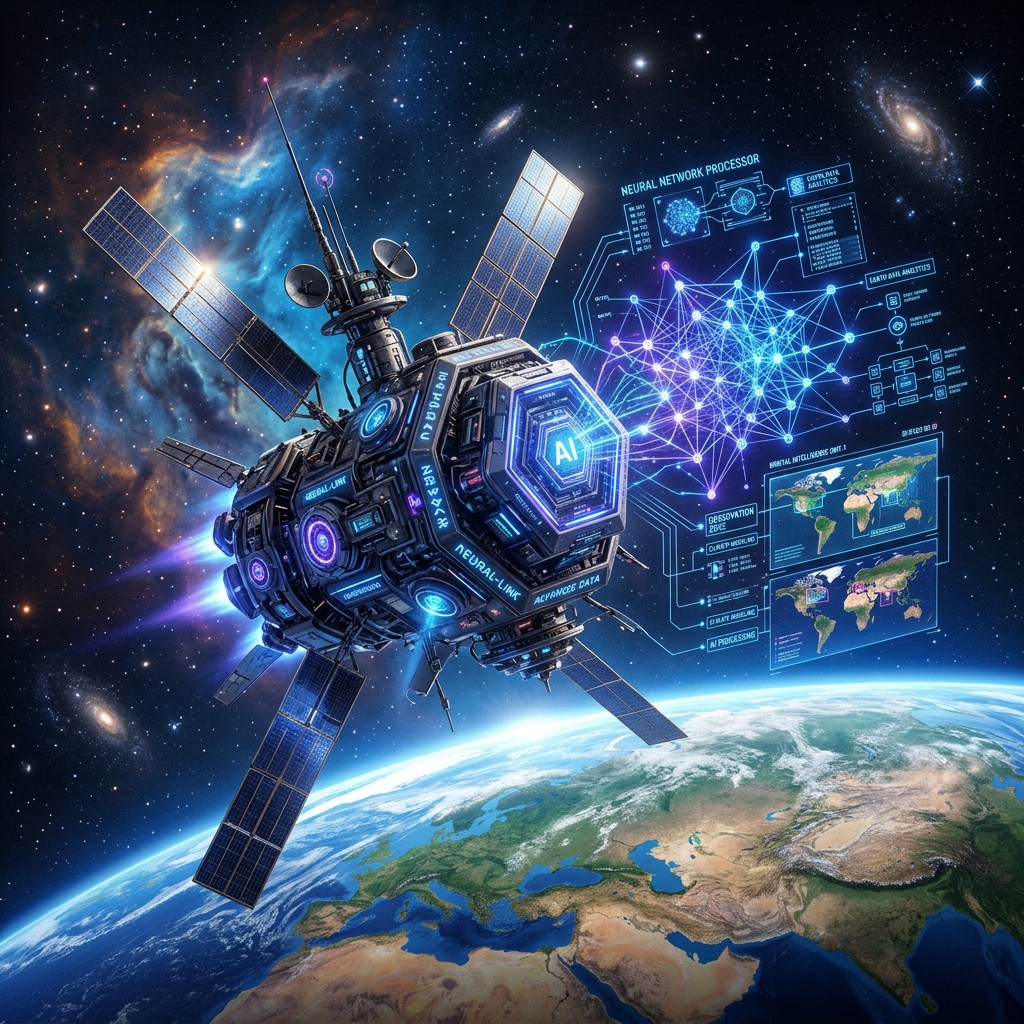
While space industry discussions a few years ago focused primarily on launch vehicles and basic satellite deployment, the space domain in 2026 has transformed into a massive computing platform that collects, processes, and distributes terabytes of data in real time.
In this article, we analyze current search interest and industry insights to explore how AI and space technologies are converging and what actionable insights this shift holds for software engineers and tech innovators.
🚀 1. The Top 3 Trends Driving AI & Space Technology in 2026
1) Zero-Latency Processing in Orbit: Space Edge Computing
Traditionally, Low Earth Orbit (LEO) satellites downlinked raw high-resolution imagery to ground stations for processing, incurring hours or days of latency alongside bandwidth bottlenecks.
- Technological Shift: Satellites in 2026 feature on-board NPUs and AI inference engines capable of detecting wildfire outbreaks, ocean pollution, and natural disasters directly in orbit.
- Key Advantage: By transmitting actionable insights and metadata instead of massive raw datasets, orbital bandwidth requirements and transmission costs drop by over 90%.
2) Autonomous Mega-Constellation Management
With tens of thousands of satellites operating in Earth's orbits, relying on manual human intervention for collision avoidance and trajectory adjustments is no longer scalable.
- Technological Shift: Machine-learning autonomous control systems execute inter-satellite communication and automated collision-avoidance routines around the clock.
- Key Advantage: Continuous risk triage and automated beam steering ensure highly reliable, resilient global 6G and satellite internet coverage.
3) Orbital Data Centers & Sustainable Solar Compute
The rapid expansion of terrestrial AI data centers has created unprecedented power consumption and cooling demands. In response, tech giants—including Google's "Project Suncatcher"—are accelerating research into space-based compute infrastructure.
- Technological Shift: Ultra-lightweight compute nodes are deployed into orbital positions with continuous 24/7 solar power availability.
- Key Advantage: Offloading intense compute workloads to orbit reduces Earth's carbon footprint while harnessing continuous solar energy for next-generation AI training pipelines.
🎯 2. Actionable Insights for Tech Leaders and Engineers
The convergence of space and AI creates rich opportunities far beyond aerospace engineering:
- Embedded AI & Model Optimization Skills
- Developing compact, radiation-hardened on-device AI applications using neural network quantization and pruning is becoming an invaluable engineering skill set.
- Distributed Systems & Fault-Tolerant Architectures
- Building hybrid cloud architectures that bridge ground and orbital nodes requires robust distributed systems expertise and fault-tolerant software engineering.
- Cross-Domain Innovation in Geospatial Analytics
- Combining Geographic Information Systems (GIS), remote sensing datasets, and AI models opens up major B2B opportunities in ESG analytics and climate forecasting.
❓ Frequently Asked Questions (FAQ)
Q1. Where is artificial intelligence making the biggest impact in space exploration?
A1. AI drives major breakthroughs in real-time orbital data processing (Space Edge Computing), autonomous satellite collision avoidance, rover navigation on planetary bodies, and automated pattern recognition in space telescope observations.
Q2. Why is Space Edge Computing relevant to general software developers?
A2. The innovations pioneered for space edge computing—such as low-power AI inference, resilient edge networking, and zero-trust fault-tolerance—directly advance terrestrial IoT, autonomous vehicles, and edge cloud systems.
🔚 Conclusion: Embracing the Orbital Tech Frontier
Google search trends in 2026 clearly signal that space has arrived as an accessible, high-performance technology platform. Software engineers and innovators who understand this intersection of AI, edge computing, and space data will lead the next wave of technological innovation.


Comments
Post a Comment