Decoding AI and Space Tech via Google Trends: 5 Key Insights Shaping 2026 Space Innovation
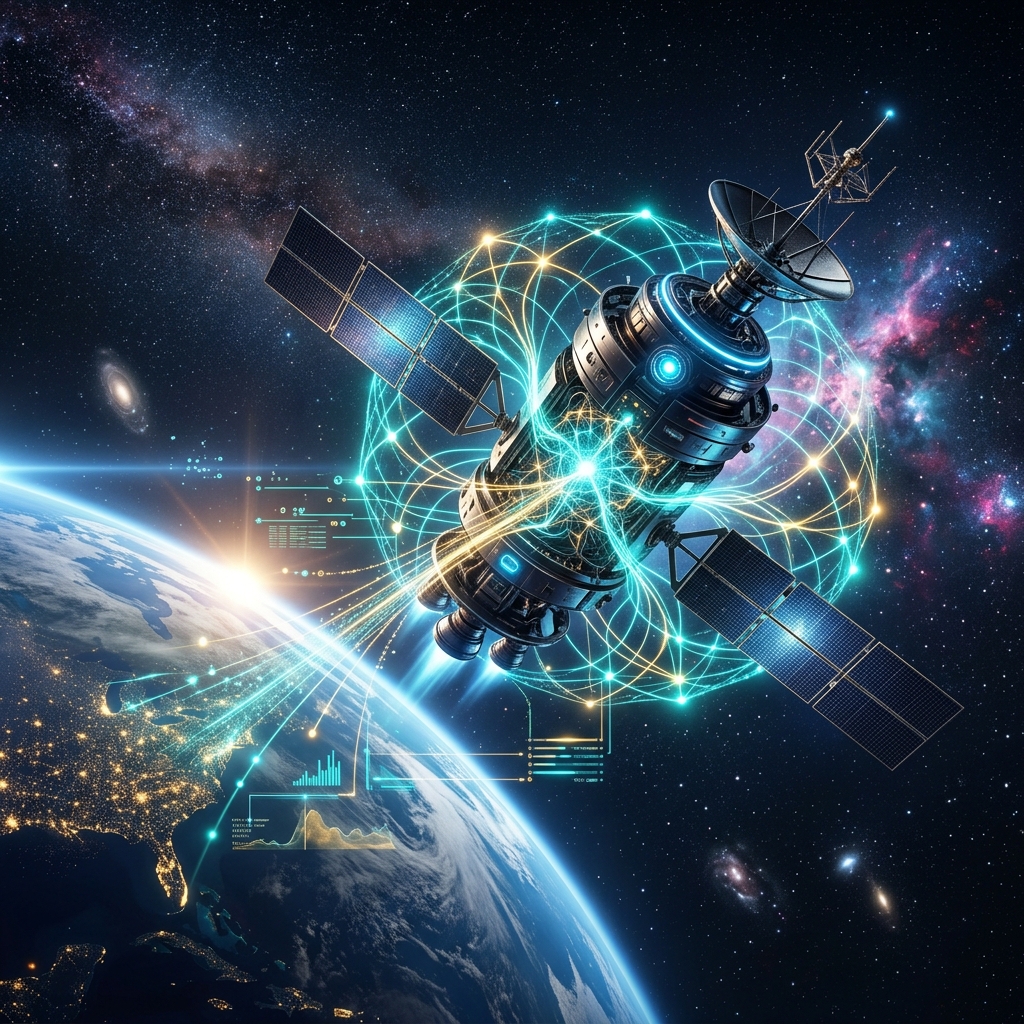
The convergence of Artificial Intelligence (AI) and Space Technology is no longer just sci-fi material—it is actively reshaping the global technology ecosystem. According to 2026 Google Trends data and market research reports, search queries related to practical industrial value, real-time edge intelligence, and space autonomy have experienced exponential growth.
Keywords like "AI in Space," "Autonomous Satellite," and "Orbital Data Center" are witnessing over 30% Compound Annual Growth Rate (CAGR) in interest among developers, software architects, and tech innovators worldwide. In this article, we break down 5 key actionable tech insights derived from Google Trends analytics and 2026 deep-space exploration breakthroughs.
1. Overcoming Latency: Edge AI & Software-Defined Satellites
Spacecraft operating in Low Earth Orbit (LEO) and deep space face severe ground communication latency. In 2026, the core driver of satellite architecture is On-Board Edge AI and Software-Defined Satellites.
- Real-Time Collision Avoidance & Beam Steering: Lightweight neural models running directly on space-grade chips evaluate orbital debris risks within milliseconds to execute autonomous maneuvers.
- On-Board Data Reduction: Instead of beaming down terabytes of raw optical or Synthetic Aperture Radar (SAR) imagery, satellite-side AI filters and compresses data, reducing bandwidth consumption by up to 70%.
💡 Takeaway for Developers: Quantized lightweight AI models and edge computing frameworks engineered for space are directly applicable to terrestrial IoT and autonomous robotics.
2. JWST Deep Space Image Restoration: Denoising AI & Spectral Classification
Behind the groundbreaking 2026 discoveries of the James Webb Space Telescope (JWST) lie sophisticated AI image restoration algorithms. Distorted infrared signals from early cosmic galaxies are now restored with unprecedented clarity.
- AMIGO & ASTERIS Algorithms: Physics-informed neural network frameworks de-noise faint infrared signatures, enabling astronomers to observe the "Cosmic Dawn" epoch.
- Exoplanet Atmospheric Profiling: Machine learning models classify complex spectroscopic signatures from millions of star-light observations to automatically detect water vapor, methane, and carbon dioxide.
3. The Artemis Program & Multi-Robot Lunar Swarms (CADRE)
NASA’s Artemis program relies heavily on CADRE (Cooperative Autonomous Distributed Robotic Exploration)—a multi-agent robotic system capable of autonomous lunar surface exploration.
- Decentralized Mapping: Without waiting for Earth commands, autonomous rover swarms form mesh networks to construct 3D elevation maps of the lunar terrain in real time.
- Energy-Aware Navigation: Swarm nodes compute solar angles and terrain hazards dynamically to maximize operational life.
4. Orbital Data Centers: The Next Frontier for Compute Infrastructure
One of the fastest-growing technology trends on Google Search is Orbital Data Centers. As terrestrial data centers face massive energy and cooling constraints, deploying AI compute nodes into orbit leverages continuous solar energy and radiative cooling in vacuum.
- Clean Solar Energy: Continuous access to unfiltered solar power reduces reliance on ground power grids.
- Low-Latency Satellite Edge Cloud: On-orbit data processing lays the foundation for real-time global LEO cloud computing.
5. Strategic Takeaways for Engineers and Tech Leaders
- Leverage Satellite Open APIs: Integrate open-access APIs from NASA, ESA, and USGS into AI pipelines for climate analytics, agricultural forecasting, and supply chain tracking.
- Master Quantized Edge AI: Developing ultra-low-power, radiation-tolerant embedded AI models offers a distinct competitive advantage for next-generation tech hardware.
Google Trends reveals more than search metrics—it highlights where human innovation is heading. By connecting AI with space technology today, engineers and business leaders can build resilient solutions for tomorrow.


Comments
Post a Comment