GIIP Offers "Full-Service AI Development" — From Writing Code to Running the Service
GIIP Offers "Full-Service AI Development" — From Writing Code to Running the Service
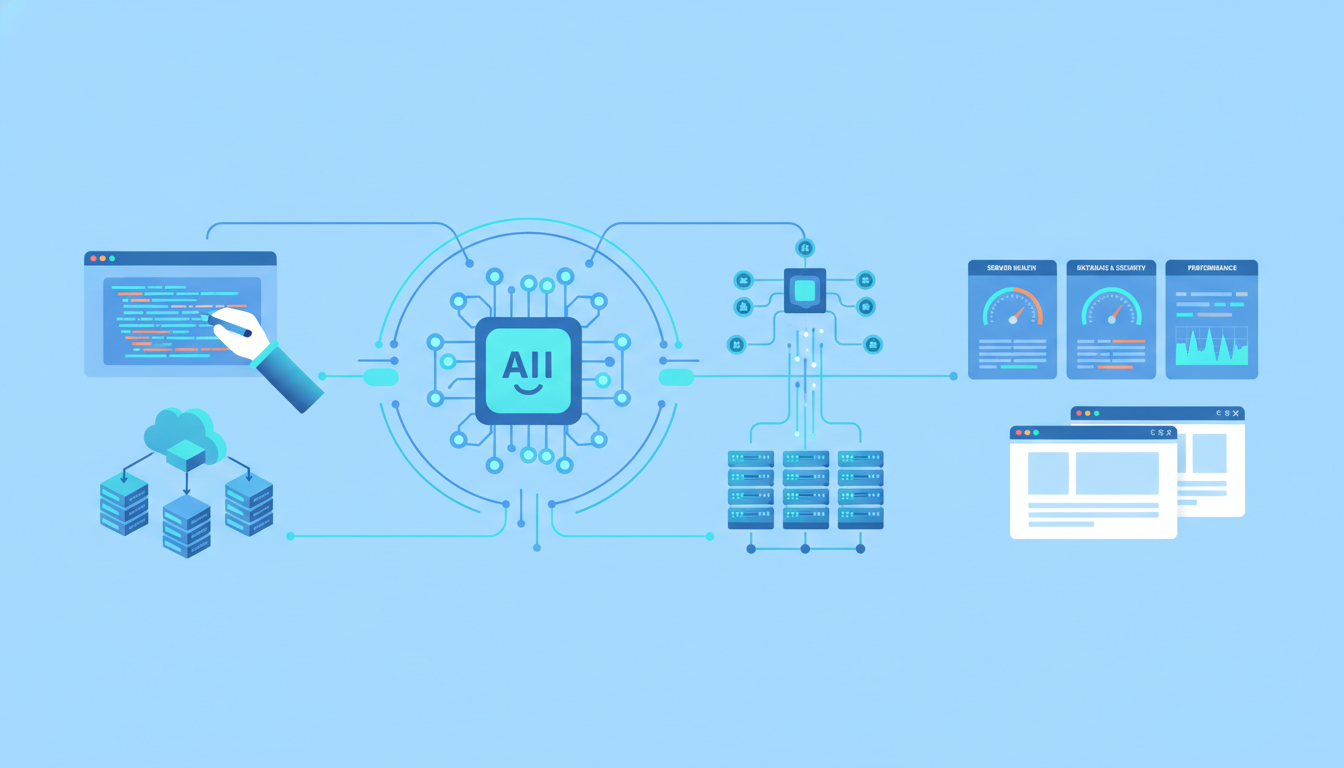
"We had AI write the code, the build succeeded — but the service still wasn't live." It's a story that comes up more and more often in engineering teams today. AI coding tools have made writing code dramatically faster, but a real gap still remains between "the code is done" and "the service is actually running." GIIP was built to close exactly that gap: instead of stopping at code generation, GIIP's AI handles infrastructure setup, deployment, real-world verification, and ongoing operations after launch — an approach GIIP calls "full-service AI development."
Typical Coding Agents Stop at "Build Succeeded"
Most coding agents implement the requested feature, run a build, and consider the job done once that build succeeds. But a successful build doesn't automatically mean the code is ready to hand to customers as a working service. Features that ran fine locally often break in a real server environment, or integrations like the database, authentication, or payments are simply missing — leaving users unable to actually use the service. "The code is finished, but we don't know how to launch it" has become a new bottleneck of the AI development era.
What Makes GIIP Different: It Builds and Verifies Staging and Production, Not Just Dev
The fundamental difference with GIIP is that its AI doesn't stop at the development environment. GIIP's AI builds out a staging environment and a real production environment, then accesses the service through its actual live URL to check, one by one, whether the screens render correctly, the APIs respond as intended, the database is properly connected, login and authentication work, and payments and networking are functioning without issues. In other words, this isn't "an AI that writes code" — it's "an AI that verifies the service the way a real user would."
Launch Isn't the Finish Line — Operations Continue After Deployment
The moment a service goes live is actually when GIIP's AI role kicks into high gear. It continuously monitors servers, the database, logs, performance, security, and actual usage. When it detects an anomaly, it analyzes the root cause and carries the fix through — recovery, patching, and redeployment — end to end. The AI effectively takes on the role of an operations engineer, so the service stays stable without requiring constant human intervention.
Three Common Failure Patterns in AI Development — and How GIIP Solves Them
Projects built with AI tend to run into the same three failure patterns:
- The code is done, but there's no way to launch it — with no one to handle infrastructure and deployment, the finished code just sits unused.
- It worked in the test environment but breaks in production — environment differences surface as bugs only after going live.
- The service launched, but nobody can operate it — when something breaks, there's no one available to respond, and the service is left neglected.
GIIP builds a dedicated stage for each of these three problems — automated deployment, direct verification in a live-service environment, and continuous operational monitoring — into a single pipeline from day one, structurally preventing the issues before they occur.
An AI That Assists Development vs. an AI That Runs the Service — What's the Real Difference?
The most common question is: "How is GIIP actually different from a typical AI coding tool?" The answer is straightforward. A typical coding agent is "an AI that assists development" — its role ends at writing and building code. GIIP, by contrast, is "an AI that launches a web service and keeps running it." Writing good code and reliably operating a service are entirely different capabilities, and GIIP's distinction is that it unifies both into a single AI workflow.
Conclusion: What Matters Isn't "AI Wrote the Code" — It's "Customers Can Actually Use It"
In the end, what really matters in AI development isn't how well you get AI to write code. It's completing the service to a state customers can actually use, and keeping that service running reliably after launch. If a typical coding agent is "an AI that helps with development," GIIP is "an AI that launches a web service and keeps operating it." That is the essence of what GIIP means by full-service AI development.


Comments
Post a Comment