The Fusion of AI and Space Technology via Google Trends: Key Insights Shaping 2026 Space Exploration
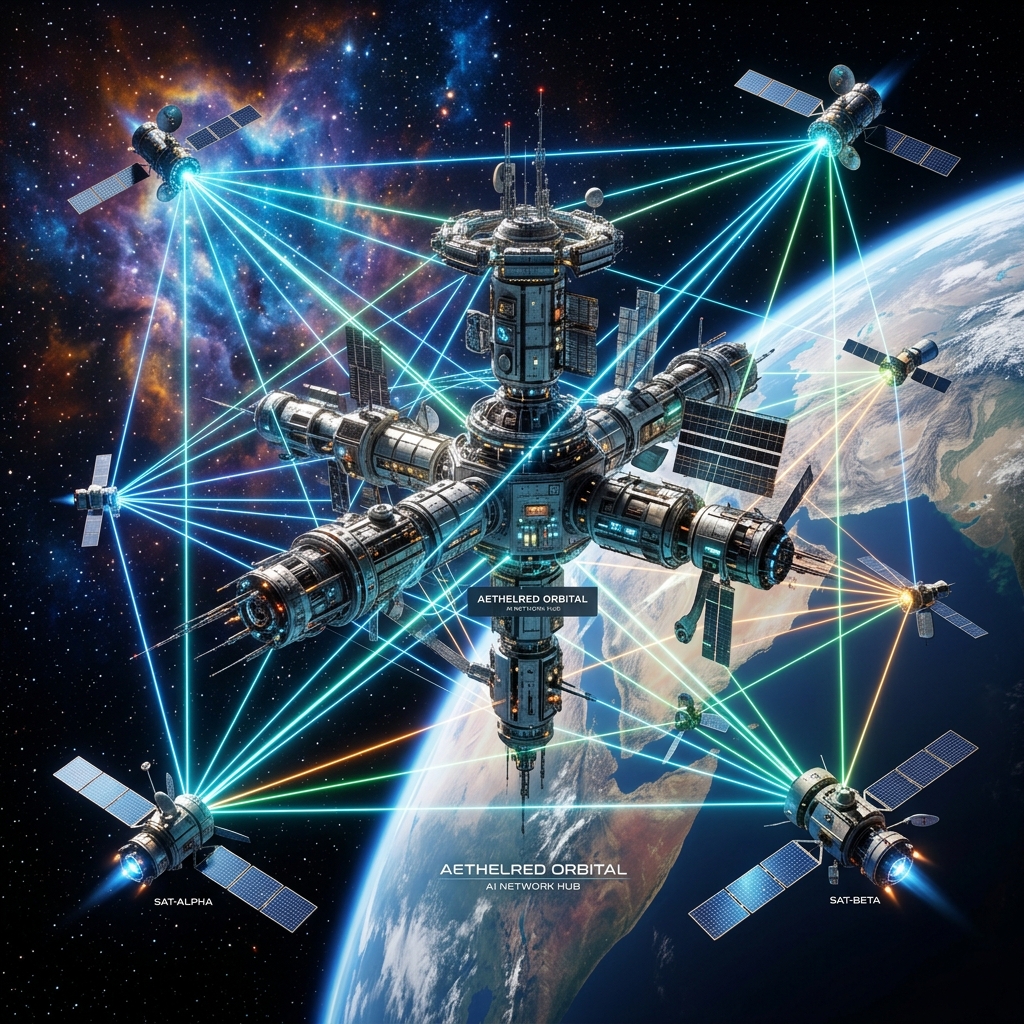
Introduction: Google Trends Highlights 2026's Frontier Tech 'AI × Space'
An analysis of recent Google Trends data reveals a dramatic surge in search queries related to Artificial Intelligence (AI), Space Exploration, and Autonomous Satellite Systems. While space technology was historically dominated by government agencies, 2026 marks the full realization of 'Space 2.0'—a private-sector-led era driven by AI integration.
In deep space or orbital environments hundreds of thousands of kilometers away, communication latency makes waiting for ground-station commands impractical. Modern spacecraft and satellites must think and act autonomously, powered by Edge AI and on-board computing.
In this article, we break down the three primary pillars of AI and space technology trending on Google Trends and share actionable insights for tech professionals, engineers, and curious readers alike.
1. Satellite Autonomous Navigation Powered by Edge AI
One of the most impressive breakthroughs of AI in space is autonomous satellite navigation. Instead of relying solely on ground stations for orbit calculations, modern satellites leverage lightweight Edge AI models directly on embedded hardware.
- Real-time Collision Avoidance: With Low Earth Orbit (LEO) growing increasingly congested with mega-constellations and orbital debris, AI systems monitor surrounding trajectories in real time and trigger autonomous thruster burns to avoid collisions.
- Overcoming Latency in Deep Space: During missions to the far side of the Moon or Mars, rovers and probes use AI-driven computer vision and pathfinding algorithms for real-time hazard detection without waiting for Earth transmissions.
- Aerospace Large Language Models (LLMs): Cutting-edge aerospace-specific LLMs are being deployed onboard satellites to process natural language telemetry diagnostics and automated orbital maneuvers.
2. James Webb Space Telescope (JWST) & Astronomical Big Data AI Processing
Instruments like the James Webb Space Telescope (JWST) transmit gigabytes to terabytes of raw high-resolution data back to Earth every single day. Human researchers alone cannot manually process this immense telemetry volume.
- Noise Filtering & Feature Categorization: Deep learning algorithms autonomously strip background noise, detect subtle exoplanetary transit signals, and classify distant galaxies in seconds.
- Automated Observation Scheduling: AI dynamically optimizes telescope observation schedules based on orbital conditions and atmospheric variables, maximizing scientific output for multi-billion-dollar space assets.
- Cosmological Modeling: Generative AI and physics-informed models accelerate our understanding of dark matter distribution and early galaxy formation.
3. Space Debris Tracking & Space Traffic Management (STM)
The rising popularity of search terms like "Space Debris AI" and "Space Traffic Management" reflects heightened industry concern over orbital safety.
- Tracking Tens of Thousands of Debris Particles: AI probabilistic models combined with multi-sensor data fusion predict trajectories for space junk as small as a few centimeters.
- Ensuring Orbital Sustainability: Minimizing collision risks guarantees long-term space access and extends the operational lifespan of active commercial satellites.
3 Key Insights for Tech Professionals & Readers
- Extreme Scalability of Edge AI: Autonomous systems perfected for orbital conditions provide direct blueprints for ground-based applications—such as autonomous vehicles, maritime navigation, and smart robotics operating in low-connectivity zones.
- Mastering AI-Driven Data Automation: The ability to extract signals from massive data streams is a foundational skill across IT, bio-tech, finance, and enterprise log analytics.
- The Rise of Interdisciplinary Engineers: Future tech opportunities will increasingly favor professionals who bridge distinct domains—such as Aerospace + AI, or Robotics + LLM architectures.
Conclusion: AI as Humanity's Partner in the Space Era
Google Trends demonstrates more than search popularity—it signals that humanity's frontier of exploration is expanding exponentially through AI. Artificial Intelligence is no longer just software; it has become an indispensable "smart avatar" for exploring the harsh realities of space.
Stay tuned as AI and space technology continue to reshape our understanding of the universe!


Comments
Post a Comment