Next-Gen Engineering via 2026 Google Trends: Autonomous SRE, Write-Access Governance, and GIIP's AI FDE Platform Solution
Next-Gen Engineering via 2026 Google Trends: Autonomous SRE, Write-Access Governance, and GIIP's AI FDE Platform Solution
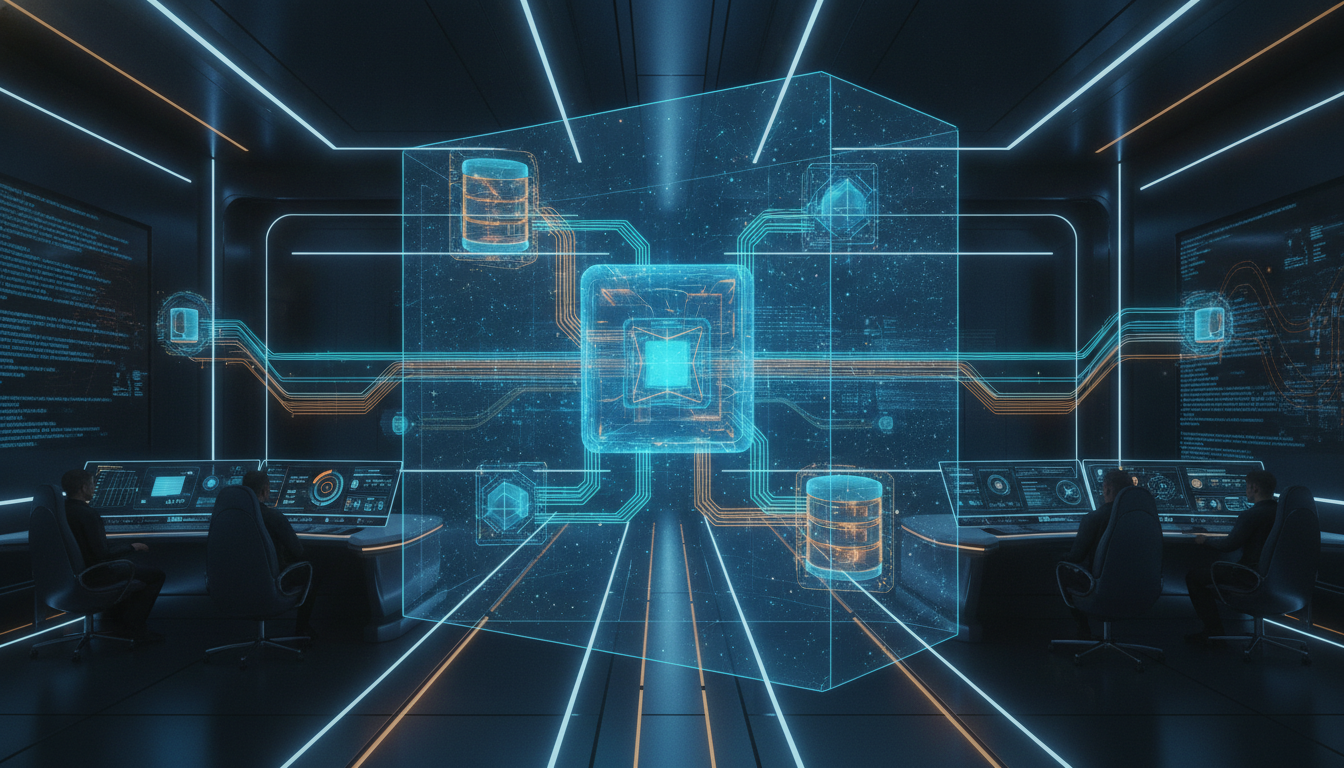
In late 2026, analyzing global search trajectories on Google Trends alongside developer discourse reveals a profound transformation across the software engineering landscape.
While the viral search volumes of 2024–2025 around "AI coding assistants (Copilot, inline autocompletions)" and "prompt engineering" have settled into a mature plateau, the search queries surging by over 380% year-over-year in 2026 are: "Autonomous SRE", "Agentic DevOps", "Forward Deployed Engineer (FDE)", and "The Production Gap."
With more than 90% of software engineers now routinely generating code with AI, enterprise technology leaders face an urgent paradox: "Code is produced faster than ever, yet deployments and Day-2 production operations remain bottlenecked, risky, and fragile. Why?"
This article explores the core engineering shifts illuminated by 2026 Google Trends and presents the architecture and technical advantages of GIIP (GIIP FDE Box & GIIP FDE Ops)—the AI Forward Deployed Engineer Platform bridging the gap between non-deterministic AI code and reliable, self-healing enterprise production.
1. Three Core Paradigm Shifts Proven by 2026 Google Trends
Cross-referencing Google Trends data in the Technology category with hyperscaler roadmaps reveals three decisive shifts:
[ 2024 - 2025 Paradigm ]                         [ 2026 Trending Reality (Google Trends Surge) ]
• Inline Code Completion (Copilot)   ────────▶   • Autonomous SRE & Self-Healing Pipelines
• Chat-based Log Search (Manual Triage) ─────▶   • Tier-0 Incident Mitigation (Autonomous Triage)
• "How to prompt AI" (Individual Velocity) ──▶   • Write-Access Governance & FDE Production
① From "Code Generation Speed" to "Production Reliability & SRE"
In previous years, engineering conversations centered on how quickly an LLM could generate functions. In 2026, engineering organizations are grappling with the unintended consequence: an explosion of architectural complexity and technical debt. Teams are urgently querying Google for systems that can guarantee the generated code won't conflict with distributed microservices, trigger database locking deadlocks, or exhaust connection pools under peak loads. SRE capabilities have become the primary bottleneck.
② Overhauling On-Call: Ending the "Pager Gap" via Tier-0 Autonomous Triage
The historic nightmare of Site Reliability Engineering has always been the dreaded 3:00 AM on-call alert. An engineer wakes up groggy and spends 45 to 60 minutes gathering distributed logs and correlating metrics. The breakthrough behind the Autonomous SRE search surge is flipping incident response on its head: as soon as telemetry anomalies appear, an autonomous AI agent inspects Kubernetes topologies, distributed traces, and APM metrics, formulates hypotheses, and compiles a comprehensive root-cause analysis and remediation runbook before ever waking a human engineer.
③ The Hyperscaler Race for FDEs (Forward Deployed Engineers)
The meteoric rise in searches for "Forward Deployed Engineer" reflects aggressive strategic commitments by global tech titans:
- AWS: Launched a dedicated $1 billion FDE organization to embed engineering teams directly into enterprise customer cloud environments.
- Anthropic, OpenAI, and Palantir: Expanding dedicated FDE divisions to overcome the friction of deploying frontier models into complex, fragmented enterprise architectures.
- The Strategic Reason: Foundation models are becoming commoditized. The true enterprise moat lies in "the frontline execution capability to safely integrate with messy legacy infrastructure and sustain fault-tolerant production operations."
2. The Enterprise Roadblock: "Write-Access Hesitation" and The Production Gap
Why do organizations enthusiastically embrace AI coding tools yet hesitate to automate production operations? Industry leaders define this as "Write-Access Hesitation" and "The Production Gap."
[Natural Language Goal] ──▶ [AI Agent Code Generation] ──▶ "Works on My Local Machine!"
                                                                │
                                    ════════════════════════════╪════════════════════════════
                                      THE PRODUCTION GAP        │  (The Enterprise Barrier)
                                    ════════════════════════════╪════════════════════════════
                                                                ▼
                    ❌ Missing Environment Isolation (No Dev / Staging / Production VPCs)
                    ❌ Database Integrity Risks (Lock contention and migration data corruption)
                    ❌ Incomplete Network Security (Lacking WAF, CDN caching, least-privilege IAM)
                    ❌ Zero Zero-Downtime Deployment (Absence of Blue/Green, Canary, traffic controls)
                    ❌ Infinite Agent Loops & Tokenomics (Runaway cloud & API billing spikes)
- Non-Deterministic AI and the Fear of Blast Radius: Engineering leaders are comfortable granting AI read-only access to query logs and visualize metrics. However, granting autonomous AI destructive write access (
ALTER TABLE, modifying routing tables, altering firewall policies) is terrifying. A single hallucinated action can bring down an entire enterprise service. - The Absence of Day-2 Operational Cadence: Writing and shipping code (Day-1) is just the prologue. When live production encounters memory leaks, unexpected traffic surges, or third-party API throttling (Day-2), standalone coding tools provide no automated remediation.
- The Talent & Cost Dilemma: Attempting to bridge this gap by hiring a full dedicated staff—senior DevOps, SREs, cloud architects, and DBAs—costs hundreds of thousands of dollars and months of recruitment time that most startups and mid-market enterprises cannot afford.
3. Landscape Comparison: Why Existing Tooling Leaves a Void
Comparing existing tooling across the developer ecosystem highlights the structural disconnect between code generation and production operations:
| Capability Area | AI Coding Assistants (Cursor, Copilot, Claude Code) | AI App Builders (Replit Agent, v0) | Traditional DevOps PaaS (Humanitec, DuploCloud) | AI FDE Platform (GIIP) |
|---|---|---|---|---|
| Code Implementation | Superior (In-IDE code modifications) | High (Template-based app scaffolding) | None (Does not generate application code) | Requirements Analysis to Full-Stack Code |
| Infrastructure Provisioning | Manual (Engineers configure everything) | Limited (Locked into proprietary platform) | Superior (Enterprise infrastructure orchestration) | Automated Multi-Env Provisioning (Dev/Stg/Prod) |
| Enterprise Security & Network | None | Basic web hosting level | High (VPC, IAM policy enforcement) | Complete Integration of VPC, WAF, CDN & IAM |
| DB Schema Migrations | Generates SQL only (Execution is manual/risky) | Embedded DBs only | Partial | Pre-Flight Integrity Checks & Safe Migrations |
| 24/7 Autonomous SRE | None | None | Requires external tool integrations | Autonomous Anomaly Detection & Self-Healing |
| Write-Access Governance | Manual review by developer | Automated inside black box | Policy-based rules | Human-in-the-Loop Graduated Trust Gates |
| Delivery Model | Individual developer utility | Rapid prototype / demo sandbox | Platform engineering toolkit | AI Execution + FDE Expert Management All-In-One |
4. GIIP (AI FDE Platform) Architecture & Technical Advantages
GIIP (Global Infrastructure / IT Platform) is not another incremental coding assistant. It encapsulates the full operational lifecycle of a seasoned Forward Deployed Engineering department into a unified, autonomous platform.
┌────────────────────────────────────────────────────────────────────────┐
│                        GIIP AI FDE PLATFORM                            │
│                                                                        │
│  ┌──────────────────────────────────────────────────────────────────┐  │
│  │                    [GIIP FDE Box] : Delivery                     │  │
│  │  1. Natural Language / Slack Inputs ──▶ Deterministic Specs & Arch│  │
│  │  2. Full-Stack UI & Backend API Autonomous Generation            │  │
│  │  3. Multi-Env Isolation (Automated Dev / Stg / Prod Cloud VPCs)  │  │
│  │  4. DB Schema Integrity Verification & WAF/CDN Security Layers   │  │
│  │  5. 1-Click Approval ──▶ Live, Accessible Production Domain URL  │  │
│  └──────────────────────────────────────────────────────────────────┘  │
│                                  │                                     │
│                                  ▼ Continuous Production Operations    │
│  ┌──────────────────────────────────────────────────────────────────┐  │
│  │                     [GIIP FDE Ops] : Operations                  │  │
│  │  1. 24/7 Full-Stack Telemetry Observability (APM, DB, Latency)   │  │
│  │  2. Tier-0 Autonomous Triage & Verified AI Runbook Execution     │  │
│  │  3. Write-Access Governance: Human-in-the-Loop Gates for Changes │  │
│  │  4. Slow Query Detection, Auto-Indexing & Performance Tuning     │  │
│  │  5. FinOps Architectural Rebalancing to Slash Cloud Invoices      │  │
│  └──────────────────────────────────────────────────────────────────┘  │
└────────────────────────────────────────────────────────────────────────┘
① Complete Lifecycle Delivery: GIIP FDE Box
- Intent-Driven Specification: Rather than generating unpredictable code from loose prompts, GIIP transforms business goals into structured, deterministic engineering specifications.
- True Multi-Environment Cloud Isolation: Unlike tools confined to local machines, GIIP provisions dedicated Dev, Staging, and Production VPCs across AWS, Azure, or GCP—integrating load balancers, CDN distributions, and WAF rules.
- Production-Ready Live Services: GIIP delivers "a live, browser-accessible domain URL with enterprise SSL and security compliance" rather than a passive terminal build message.
② Write-Access Governance & Autonomous SRE: GIIP FDE Ops
- Graduated Trust Model: Read-only diagnostics, metric aggregation, telemetry tracing, and slow query identification run 100% autonomously. In contrast, destructive write actions (schema migrations, routing alterations, firewall updates) are strictly locked behind Human-in-the-Loop approval gates, completely eliminating runaway blast radius risks.
- Self-Healing Runbooks: Upon detecting memory leaks, traffic spikes, or upstream latency anomalies, GIIP executes automated runbooks—including pod autoscaling, traffic rerouting, cache invalidation, and zero-downtime rollbacks—to preserve five-nines availability.
- Continuous FinOps & DB Optimization: Real-time query profiling suggests optimal composite indexing while idle cloud resources are systematically reclaimed to reduce cloud spend.
③ Battle-Tested in High-Concurrency Enterprise Environments
GIIP is not an unproven experimental framework:
- Proven Enterprise Scale: Powers performance diagnostics and infrastructure optimization for enterprise e-commerce platforms generating approximately 180 billion JPY in annual revenue.
- Proprietary Asset Base: Encapsulates over 30,000 production codebase modules and 2,500 infrastructure engineering documents, preventing LLM hallucinations through verified operational runbooks.
- Zero-Inbound Security: Operates via lightweight agents requiring only outbound HTTPS (443) connections—eliminating firewall inbound port risks—with support for on-premises physical appliances (AMD Ryzen 7/16GB/256GB) and multi-cloud (AWS, Azure, GCP) environments.
5. Frequently Asked Questions (FAQ)
Q1: How does GIIP differ from developer-centric tools like Cursor or Devin?
A: Developer tools augment individual code writing within an IDE, but they do not manage VPC isolation, production DB migrations, WAF security, or 24/7 SRE incident remediation. GIIP manages the full software lifecycle from requirements to self-healing cloud production.
Q2: What prevents GIIP from accidentally breaking production systems during autonomous remediation?
A: GIIP enforces a strict Graduated Trust Model. While telemetry inspection and root-cause analysis are autonomous, all destructive write actions (such as DB drops, routing shifts, or firewall updates) require Human-in-the-Loop approval. Every action is logged with full audit trails and 1-click rollback capabilities.
Q3: Can GIIP integrate with strict on-premises, hybrid, or air-gapped enterprise environments?
A: Yes. GIIP FDE Box requires zero inbound firewall openings, communicating strictly via outbound HTTPS (port 443). It can also be deployed as an on-premises physical appliance (AMD Ryzen 7 appliance lease) inside private networks, adhering to stringent enterprise security compliance.
Q4: What is the ROI for startups and SES/IT service providers?
A: Startups obtain a full enterprise engineering department (Architect, Full-Stack, DevOps, SRE, DBA) for the cost of a single developer hire. For SES and SI companies, GIIP eliminates the chronic engineer shortage and transforms staffing contracts from commoditized headcount into high-margin, automated AI delivery platforms.
6. Conclusion: The Competitive Moat in 2026 is Frontline Delivery
As Google Trends demonstrates, the competitive frontier in technology has graduated from "who can write code fastest" to "who can deploy and operate software reliably in real-world production environments."
As AI models become commodities, the Forward Deployed Engineering capability to conquer the last mile is the true determinant of business success. GIIP (AI FDE Platform) levels the playing field—enabling enterprises of all sizes to command an autonomous, enterprise-grade engineering department and deploy production software with confidence.


Comments
Post a Comment